Have you ever noticed how quickly a toddler lights up the moment they hear “Woof! Woof!”, “Meow! Meow!”, or “Moo! Moo!”?
For young children, animal sounds are so much more than funny noises. They’re a simple, joyful way to support early language development, memory, movement, imagination, and learning — all wrapped up in a giggle.
That’s exactly why an **animal sounds song for toddlers** has become such a beloved part of early childhood learning. Whether you’re singing along together, flipping through a picture book, or simply asking, “What does a cow say?”, these small playful moments can turn ordinary afternoons into rich learning opportunities.
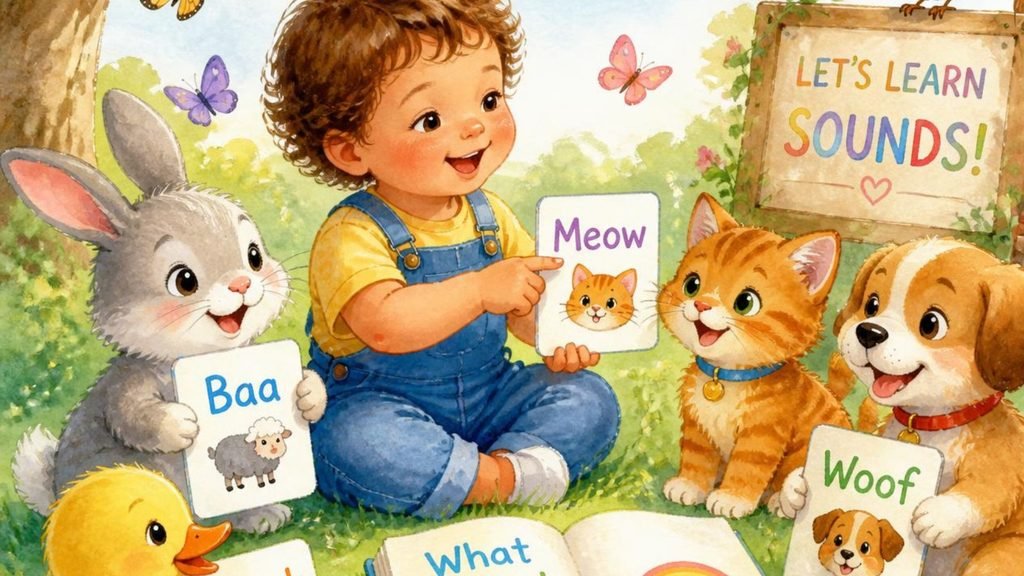
So why are toddlers so drawn to animals and the sounds they make — and how can parents use that natural curiosity to encourage learning? Let’s explore.
## Why Are Toddlers So Fascinated by Animals?
Animals are naturally exciting to young children. A barking dog, a fluffy cat, a waddling duck, or a towering elephant gives toddlers something wonderful to look at, listen to, and imitate.
At ages 1–5, children learn primarily through their senses and through repeated interactions with the world around them — and animals offer all of that in one simple, delightful package.
### 1. Animal Sounds Make Early Speech Fun
One of the biggest benefits of animal sounds is that they invite children to listen, imitate, and experiment with new sounds — no pressure, just play.
Words like these are short, repetitive, and fun to say:
– 🐶 Dog — Woof! Woof!
– 🐱 Cat — Meow! Meow!
– 🐮 Cow — Moo! Moo!
– 🦆 Duck — Quack! Quack!
– 🐑 Sheep — Baa! Baa!
For a toddler who is still learning to communicate, imitating an animal sound often feels much easier than repeating a long word or sentence.
Instead of asking your child to repeat a complicated phrase, simply ask:
> “What does the dog say?”
If they respond with “Woof!” — that’s a genuine little communication win. Over time, these playful exchanges build listening skills and expand vocabulary, one sound at a time.
### 2. Animal Songs Help Children Remember New Words
Why do kids remember songs so effortlessly? Repetition, rhythm, melody, and movement all make information easier to hold onto — and more fun to learn in the first place.
That’s exactly why an **animal sounds song for toddlers** works so well for introducing new names and sounds. Picture singing something like:
> *“The cow says moo, moo, moo,*
> *The duck says quack, quack, quack,*
> *The dog says woof, woof, woof,*
> *Come and sing and learn with us!”*
The repeated pattern gives your child chances to hear the same words again and again. And when you add actions — flapping like a bird, stomping like an elephant — the learning becomes even more interactive and memorable.
### 3. Animal Sounds Encourage Imitation and Interaction
Toddlers naturally love copying what they see and hear. Let out a funny “Roar!” and your child will likely roar right back — and just like that, a simple back-and-forth becomes a mini conversation.
Try this:
> **Parent:** “What does the lion say?”
> **Child:** “Roar!”
> **Parent:** “What does the cow say?”
> **Child:** “Moo!”
You’re not just playing a game — you’re encouraging your child to listen, respond, remember, and communicate, all at once.
### 4. Animal Movements Turn Learning Into Active Play
Learning doesn’t always have to happen sitting still. Kids learn beautifully through movement, too. Try asking your little one to:
– Hop like a rabbit 🐰
– Flap like a bird 🐦
– Crawl like a bear 🐻
– Walk slowly like a turtle 🐢
– Stomp like an elephant 🐘
– Jump like a frog 🐸
– Waddle like a duck 🦆
These activities blend movement with learning, helping children connect an animal’s name with its appearance and behavior — and most importantly, it feels like play, not a lesson.
### 5. Animals Help Toddlers Learn to Categorize
As kids grow more familiar with animals, you can gently introduce simple categories:
– **Which animals can fly?** Birds, butterflies, and some insects.
– **Which animals live in water?** Fish, dolphins, and whales.
– **Which animals have four legs?** Dogs, cats, cows, horses, and many more.
These easy questions encourage children to notice similarities and differences — and using picture cards or toys can make the concept click even faster for younger toddlers.
### 6. Animal Learning Encourages Imagination and Empathy
Animals also open the door to gentle conversations about feelings and kindness. You might ask:
– “Is the little puppy happy?”
– “What does the baby bird need?”
– “How should we treat animals?”
Simple questions like these introduce ideas about kindness and empathy in an age-appropriate, low-pressure way. A stuffed animal can even join in the fun as part of pretend play — your child might feed it, tuck it in for a nap, or “take it to the doctor.” That kind of imaginative play makes learning feel personal and meaningful.
## Which Animal Sounds Should Toddlers Learn First?
There’s no strict order every child has to follow — kids develop at their own pace. But familiar animals with simple sounds make a wonderful starting point.
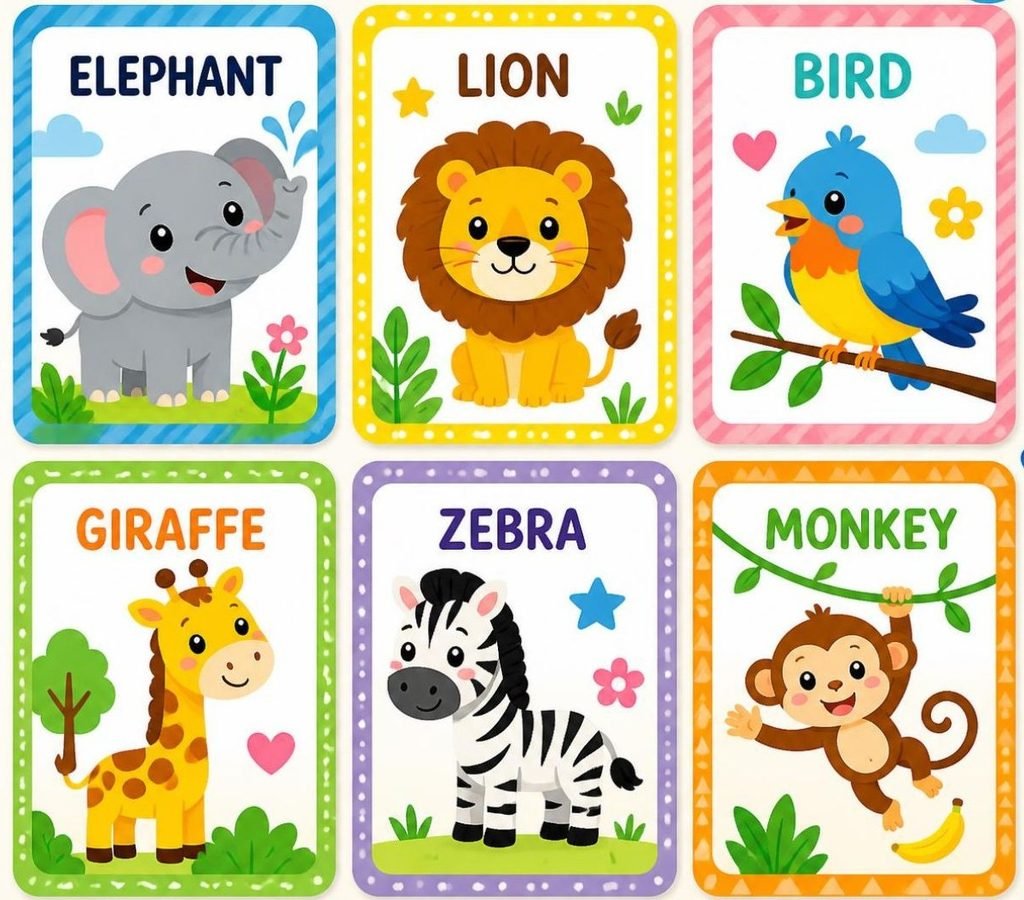
### Ages 1–3: Start With Familiar Animals
– 🐶 **Dog** — “Woof! Woof!” — easy to imitate and familiar to most children.
– 🐱 **Cat** — “Meow! Meow!” — a simple sound kids love repeating.
– 🐮 **Cow** — “Moo! Moo!” — the long “moo” makes it especially fun to sing.
– 🦆 **Duck** — “Quack! Quack!” — add a waddling walk to make it interactive.
– 🐑 **Sheep** — “Baa! Baa!” — another short sound that’s perfect for repetition.
### Ages 3–5: Explore More Animals
Once your child feels comfortable with familiar animals, branch out into new habitats:
– 🦁 Lion — Roar!
– 🐘 Elephant — Trumpet!
– 🐻 Bear — Growl!
– 🐸 Frog — Ribbit!
– 🐵 Monkey — playful calls
– 🐴 Horse — Neigh!
– 🐷 Pig — Oink!
– 🐔 Chicken — Cluck!
From here, you can introduce broader concepts too — farm animals, jungle animals, ocean animals, pets, birds, and insects.
## 7 Easy Animal-Sound Activities to Try at Home
You don’t need expensive educational toys to make animal learning fun — just a few minutes and a little imagination.
1. **Play “What Animal Is It?”** — Make an animal sound and let your child guess. “Moo, moo! What animal am I?” Then switch roles and let them stump you.
2. **Sing an animal sounds song together** — Choose a simple, repetitive tune and encourage your child to make the sound whenever the animal appears.
3. **Use animal picture cards** — Show a picture and ask, “What animal is this?” then “What sound does it make?” Give younger children plenty of time to answer.
4. **Act like an animal** — “Let’s walk like an elephant!” Then switch it up with a new animal each round.
5. **Read animal books together** — Picture books introduce names, sounds, colors, and habitats. Pause often to ask your child questions about what they see.
6. **Create an animal sound hunt** — Hide a few toy animals around the room. When your child finds one, have them name it and make its sound.
7. **Make up your own animal song** — It doesn’t need to be perfect. Try: *“The dog says woof, woof, woof! The cat says meow, meow, meow! The cow says moo, moo, moo! Let’s sing our animal song!”* Kids usually care far more about your enthusiasm than your singing voice.
## How Often Should You Practice Animal Sounds?
There’s no need to turn this into a formal lesson. Just a few minutes woven into everyday play is plenty to create meaningful learning moments. Try practicing animal sounds while:
– Playing with toys
– Reading books
– Taking a walk
– Watching animals outside
– Singing songs
– During bath time
– Getting ready for bed
The goal isn’t to have your child memorize dozens of animal sounds — the goal is simply to make learning enjoyable.
## A Simple Tip for Parents: Follow Your Child’s Interest
If your child loves dinosaurs, lean into dinosaurs. If they adore farm animals, sing farm animal songs on repeat. If they can’t stop shouting “Roar!”, turn that excitement into a game.
Children learn best when an activity connects to something they’re already fascinated by. So instead of asking, “How can I get my child to study?” — try asking:
> “What is my child excited about today?”
That single question can lead to some of the best learning moments of the week.
## Final Thoughts: Learning Can Begin With a Simple “Moo!”
Animal sounds might seem like simple childhood fun, but they open the door to language, listening, memory, movement, imagination, and social connection — all through play.
The best part? You don’t need a classroom. You don’t need expensive equipment. Sometimes all it takes is a picture of a cow and a cheerful:
> “Moo, moo!”
So the next time your toddler starts barking like a dog or roaring like a lion — join in. Sing. Laugh. Move. Repeat. Because for a young child, play isn’t just play. It’s a joyful way to discover the world, one **animal sounds song for toddlers** at a time — and that’s exactly the kind of **early childhood learning** worth celebrating.
## What Is Your Child’s Favorite Animal Sound?
Is it “Woof! Woof!”, “Meow! Meow!”, “Moo! Moo!”, or a giant “ROAR!”?
Share their favorite animal sound in the comments below! 🐶🐱🐮🦁
Looking for more learning fun? Help your toddler learn letters and animals at the same time with our bright and engaging A-Z Animal Flashcards! You can check them out here:
👉 Download Free Printables Here
https://emdikids.gumroad.com/l/dvegza
Explore Full A-Z Animal Flashcards Set Here